

How to Choose the Right Dildo: Types, Sizes, Materials & Expert Tips
So you want to buy a dildo. Maybe it's your first. Maybe your fifth. Either way, you've clicked into a category with hundreds of options and now your brain is doing that thing where it goes slightly numb from scroll fatigue. We get it. That's exactly why this guide exists. We cover every choice that matters — what type fits your vibe, what size makes sense for your body (spoiler: bigger isn't automatically better), which materials are safe, and how to take care of whatever you bring home. By the time you're done reading, you'll know exactly what you want and why you want it. Let's do this.
Where Do I Start? The Two Things That Drive the Decision
Most people start shopping with their eyes. They see something that looks hot, click on it, read the specs, get confused by five different material names and twelve size options, and close the tab feeling more lost than when they opened it. Sound familiar? Here's the trick: flip the order. Before you even glance at a product photo, ask yourself two questions. First, what do I want this thing to do? Are you after deep internal fullness? Pinpointed G-spot pressure? Something you can ride hands-free in the shower? A toy to share with your partner? The answer narrows your options by half, instantly. Second, how experienced am I with penetration? Be honest. There's zero shame in being new to this, and your answer here will steer you toward a size and feature set that'll feel good instead of intimidating. Once those two things are clear in your head, the rest of this guide turns into a simple series of yes-or-no filters. Color, brand, bells and whistles... all of that comes last. Function first, pretty second.
What Are the Different Types of Dildos?
This is your biggest filter. Every dildo type is built around a specific job, sensation, or a specific situation. Some overlap (a realistic dildo with a suction cup base, a curved toy that also vibrates), and that's totally fine. But knowing which primary function you care about most will cut your options down to a manageable shortlist fast. Let's run through them.
| Type | Best For | Experience Level | What You Get |
|---|---|---|---|
| Realistic | Lifelike sensation | Beginner+ | Familiar look and feel |
| Vibrating | Added stimulation | Beginner+ | Penetration + vibration |
| Suction Cup | Hands-free use | Beginner+ | Stability and positioning |
| G-Spot / Curved | Targeted stimulation | Beginner+ | Precision angle built in |
| Double-Ended | Partner play | Intermediate+ | Shared simultaneous use |
| Inflatable | Size progression | Intermediate+ | Full real-time size control |
| Squirting | Realistic experience | Intermediate+ | Fluid simulation |
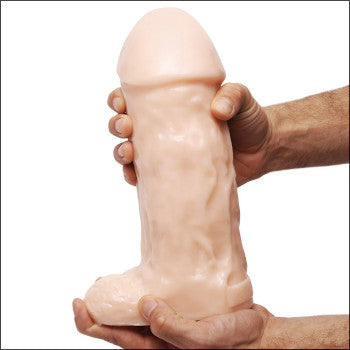
| Huge | Size play | Advanced | Maximum size experience |
Shop by Type


Realistic Dildos
You know what these look like. Veins, a defined head, that familiar shape. For a lot of people, especially first-timers, realism just makes sense. Your body already knows what to expect from this form, so there's almost no mental adjustment. If you want penetration that feels intuitive and close to the real thing, this is your category. They come in every size from modest to massive, so don't assume "realistic" means "huge." It doesn't.
Vibrating Dildos
Penetration plus buzz. That's the pitch, and it's a good one. Instead of juggling a dildo in one hand and a vibrator in the other (we've all tried it, it's like patting your head and rubbing your stomach), you get both sensations from one toy. Most have multiple speeds and patterns, so you can start low and ramp up as your body warms to it. One tip, if you're brand new: vibration can feel intense on the inside. Start on the gentlest setting. You can always crank it.
Suction Cup Dildos
Stick it to the floor. Stick it to the wall. Stick it to a smooth shower tile. Now your hands are free, your hips are doing the driving, and suddenly you've got access to angles and positions that just aren't possible when you're holding a toy. That suction base also tends to be O-ring compatible, which means if you ever get curious about strap-on play, you don't need to buy a whole separate toy. Two use cases, one purchase. Hard to argue with that.
G-Spot and Curved Dildos
Let's clear something up. That curve isn't there for aesthetics. It's engineered. An angled shaft puts pressure exactly where the G-spot lives (front wall of the vaginal canal) or, during anal play, right on the prostate. A gentle curve gives broader stimulation across the zone. A pronounced hook is more like a "right THERE" kind of precision. And here's something most people don't realize: because the curve reaches forward so efficiently, you need less length to hit the spot than you would with a straight toy. So if you've been eyeing long, straight dildos thinking length equals reach... a shorter curved toy might get you there faster.
Double-Ended Dildos
Long, flexible, and designed so that two bodies can share it at the same time. Or, if you're solo, you can play with penetration in two zones at once. The flexibility here isn't a cheap shortcut — it's what makes positioning comfortable when two people are involved. Real talk, though: this type asks more of you. Communication matters. Rhythm matters. Checking in with your partner about angle and depth matters. But when it clicks? It really clicks.
Inflatable Dildos
This one's clever. You insert it at a comfortable, modest size, then squeeze a hand pump to gradually increase the girth while it's inside you. You control how much, how fast, and you can release pressure instantly. That makes it the gentlest possible on-ramp to size play. You don't have to commit to a big toy and hope for the best — you build up in real time, at your own speed, and stop exactly where it feels right. Girth is the variable here, not length. You're feeling yourself stretch, little by little, and the fact that you're in full control of it is what makes it feel so damn good.
Squirting Dildos
There's a small reservoir inside, you fill it with warm water (or a body-safe liquid), and when you trigger the release mechanism during use... yeah. It does what you think it does. Setup takes a few minutes (filling, priming, warming the liquid to body temp), but the payoff is a level of realism that genuinely catches people off guard the first time. The internal tubing means you'll want to spend a little extra time on cleanup afterward. Don't get lazy about it, and you'll be fine.
Huge Dildos
Let's be direct — this category is not where you start. Oversized toys exist for experienced users who've put in the time with smaller sizes and know that extreme fullness, that feeling of being stretched to the edge, is what gets them off. Getting there safely takes warm-up, patience, and genuinely absurd amounts of lube. If you're new and your eyes are bigger than your... experience level, pump the brakes. Work up. The people who love this category the most are the ones who treated it as a destination they arrived at gradually, not a starting line.
What Size Dildo Should I Get?
Okay, here's where egos get bruised and expectations get recalibrated. We see it constantly: someone shopping for their first toy grabs something 8 inches long and thick as a wrist because, well, go big or go home, right? Wrong. So wrong. A toy that's too big makes your body tense up. Tension is the opposite of pleasure. And a tense, uncomfortable first experience tends to put people off toys entirely — which is a shame, because the problem was never them. It was the size.
Let's break this apart. Length and girth are two completely different conversations. Most people fixate on length because it's the more dramatic number on the page. But girth — the diameter or circumference — is what you'll feel more intensely. An extra half-inch of width hits differently than an extra inch of length. When you're comparing products, spend at least as much time looking at the diameter measurement as the length.
A few shape details worth knowing. Tapered tips make a real difference during insertion, especially with firmer materials. That gradual narrowing lets your body open at its own pace instead of meeting a blunt edge. Ridges and textured surfaces add friction on every stroke, which feels amazing if you already know you're into that, but can be a lot if you're still figuring out what you like. Keep it smooth at first. And if you have any interest in anal play, listen closely: a flared base isn't optional. The rectum has no natural stopping point. A toy without a wide flared base can travel inside, beyond your reach, and that's an emergency room visit nobody wants to explain. Flared base, always. No debate.
Here's the truth nobody in a product listing will tell you: a 5-inch dildo that feels comfortable, that lets your body relax and respond, will give you a wildly better time than an 8-inch one that makes you clench and wince. You can always size up later once you know your body. You can't undo a bad first experience. Start kind. Start comfortably.
First-Timer Tip
A length of around 5 inches and a diameter of 1 to 1.25 inches is a comfortable, widely loved starting point. And lube. Lube lube lube. At every size. Don't skip it.
| Size Category | Approx. Length | Approx. Diameter | Who It Suits |
|---|---|---|---|
| Beginner | 4 to 5 in | 1 to 1.25 in | First-time buyers |
| Intermediate | 5 to 7 in | 1.25 to 1.75 in | Some experience |
| Advanced | 7 to 9 in | 1.75 to 2.25 in | Regular users |
| Large / Huge | 9 in+ | 2.25 in+ | Experienced size play |





What Material Should a Dildo Be Made From?
This is the decision that has the right answer. Type is a preference. Size is personal. Color is whatever makes you happy. But material? Material determines how your body interacts with that toy at a cellular level. Can bacteria hide inside it? Can you sterilize it fully? Will it irritate sensitive tissue over time? They're health questions. And the answers live in what the toy is made of.
Body-Safe, Non-Porous Materials
Three materials sit at the top of the safety chart. All of them are non-porous, meaning the surface is completely sealed. Bacteria, mold, fungi — nothing gets in. And all three can be sterilized completely between uses.
Medical-Grade Silicone
If sex educators could pick one material to recommend for the rest of time, this would be it. Non-porous, hypoallergenic, and available in everything from marshmallow-soft to satisfyingly firm. It warms up to body temperature within minutes of being inside you, which gives it a natural, alive kind of feel that a lot of people love. One rule you need to memorize: silicone lube will wreck a silicone toy. It degrades the surface, makes it sticky, ruins the finish. Water-based lube only. Tattoo it on your brain.
Borosilicate Glass
Smooth. Hard. Precise. Glass feels completely different from silicone, and a lot of users (especially those who love G-spot or prostate stimulation) find that firmness hits spots that softer materials glide right past. It's also a dream for temperature play: run it under warm water for a heated, almost-melting sensation, or drop it in a bowl of ice water for a shivery cold that'll make your toes curl. Glass toys last basically forever with decent care. Just give it a quick look-over before each use. Any chip, any crack, any rough edge? Done. Retire it immediately.
Stainless Steel
Same safety profile as glass, with serious weight behind it. There's a gravity to steel toys (literally) that creates a deep, grounding internal pressure you won't get from anything lighter. Temperature play works beautifully here, too. And durability? These things are practically immortal. You'll hand it down to... actually, no, don't do that. But it will outlast everything else in your collection by decades.
Shop by Material


Which Materials Need Extra Care?
TPE and TPR are soft, stretchy, affordable, and they feel really nice in your hand. They're everywhere in the toy market, and for good reason: the price point is accessible, and the texture is appealing. But they're porous. That means the surface has tiny openings where bacteria can settle in and set up camp, even after you wash thoroughly. You can't fully sterilize them, period. The move? Always use a condom over a TPE/TPR toy. And plan to toss it and grab a new one every 6 to 12 months if you're using it regularly. That's not fear-mongering — it's just honest upkeep. With a condom on, they're a totally reasonable choice, especially if you're on a budget.
Materials to Avoid for Unprotected Use
PVC and jelly rubber often contain phthalates — chemical softeners linked to skin irritation and some longer-term health concerns. You can usually identify them before you even open the package: that strong, almost chemical smell, and a surface that feels sticky or tacky right out of the box. If you've already got one in your drawer, slap a condom on it, and it's usable. But if you're buying fresh? Spend a few extra dollars and get silicone. Your body deserves better than bargain-bin mystery chemicals.
| Material | Non-Porous | Temp Play | Lube Type | Notes |
|---|---|---|---|---|
| Silicone | ✔ | Limited | Water-based only | Soft to firm range |
| Glass | ✔ | ✔ | All types | Inspect before use |
| Steel | ✔ | ✔ | All types | Heavy, firm |
| TPE / TPR | ✘ | ✘ | Water-based | Use with condom |
| PVC / Jelly | ✘ | ✘ | Water-based | Use with condom |
Colors, Aesthetics, and Fantasy Themes
Now for the part that's pure fun. How a toy looks doesn't change what it does physically, but it absolutely changes how you feel picking it up — and that headspace matters. The mood you bring to the experience shapes the experience itself.
On one end of the spectrum, you've got realistic: natural skin tones, anatomical detail, veins and all. Some people want that. It feels intimate, familiar, grounded in something recognizable. On the other end? Full-on fantasy. Dragons. Tentacles. Alien creatures. Designs that don't reference human anatomy at all and instead pull from mythology, sci-fi, or pure imagination. Fantasy dildos have blown up in popularity over the last few years, and not just as novelties. The craftsmanship on the best ones is absurd: hand-poured silicone with color gradients, sculpted textures, shapes that hit internal spots in ways conventional designs never would. They're art pieces that also happen to make you come.
Neither direction is "more serious" or "more legitimate" than the other. Want a lifelike replica? Great. Want a glittery purple dragon tongue? Also great. Grab whatever makes you grin when you see it. Whatever puts you in the mood before it even touches your body. That's the right choice.
Shop by Theme


How to Choose the Right Dildo for Me?
If you've been reading along, you probably already have a pretty clear sense of what you want. You might not have realized it yet, but the instinct is there. This section is really just about confirming what your gut is already telling you.
Think about your goal. What does the ideal session look like in your head? Deep, filling penetration? Targeted, curl-your-toes G-spot pressure? Hands-free riding on a shower wall? Sharing something intimate with a partner? Your answer points you straight toward a type.
Now, be real with yourself about experience. Not where you'd like to be — where you are. If penetration is relatively new for you, a 5-inch, gently tapered silicone toy will teach you more about your own body and what turns you on than a massive beast ever could. There is absolutely no rush. Sizing up happens naturally as you learn what feels good and want to push a little further.
Pick your material next. If your budget allows it, go non-porous: silicone, glass, or steel. Your body (and your cleaning routine) will be happier for it.
Then size. Girth over length for most people. Tapered tip for easier entry. And comfort beats ambition every time. Every. Time.
Last step: compatibility. Planning on a strap-on? You need an O-ring compatible base. Any chance of anal play? Flared base, non-negotiable. Want it in the tub? Confirm waterproof ratings on anything with a motor.
Five decisions. Goal, experience, material, size, compatibility. That's the whole thing.
Quick Compatibility Check
Anal use requires a flared base — that's a safety rule, not a suggestion. Strap-on play needs an O-ring compatible base. Vibrating toys used in water need a confirmed waterproof rating. Check these before you hit "add to cart."
Preparation, Safety, and Lubrication
Five minutes of prep. That's all it takes. And the gap between "that was okay, I guess" and "holy shit, I need to do that again" almost always comes down to those five minutes.
Lube goes on first, and it goes on generously. Your body produces some natural lubrication, sure, but "some" isn't enough when you're introducing a toy. Water-based lube works with every material on the market. Silicone-based lube gives a longer-lasting slick feel and works great with glass and steel, but it will destroy a silicone toy over time. When in doubt? Water-based. Squeeze out more than you think you need. You can wipe away extra. Stopping mid-session because things got dry and uncomfortable is a mood killer.
Wash the toy before first use. Even if it just came out of a sealed package. Manufacturing residue, packaging dust, whatever. Warm water, mild unscented soap, rinse well, let it dry. Two minutes and you're done.
Go slow and stay tuned in to what your body is saying. Start with shallow penetration. Breathe. Let yourself adjust. If something hurts (actual pain, not just the unfamiliarity of a new sensation), stop. Add more lube. Try a different angle. Or put the toy down and come back to it another time. Pushing through discomfort doesn't make you tougher — it makes the experience worse and can cause real irritation or injury. Your body isn't an obstacle to overcome. It's the whole point. The more relaxed you are, the more sensation you'll feel, and relaxation only happens when you trust that you're setting the pace.
Cleaning, Storage, and Long-Term Care
Taking care of your toys is easy. We're talking a few minutes after each session and some common-sense storage. That's it.
Non-motorized silicone, glass, and steel can handle the tough stuff: boiling in water for 3 to 5 minutes, a cycle on the top rack of your dishwasher (skip the soap), or a soak in a diluted bleach solution (10% bleach, 90% water) followed by a thorough rinse. Any of these fully sterilize the surface.
Toys with motors or electronics can't be submerged like that, even if they're labeled waterproof. Wipe them down with a toy cleaner or mild soap and warm water. Get into the seams and textured areas where stuff likes to hide.
TPE and TPR get warm water and mild soap only. No boiling. No bleach. Dry them completely before putting them away, because trapped moisture in a porous material is a bacteria party.
Storage: Give each toy its own breathable pouch — cotton, microfiber, the little satin bag it probably came with. Avoid sealed plastic bags (moisture gets trapped). Keep different materials separated. Silicone touching silicone is fine. Silicone stored against TPE? They can react and degrade each other's surface. A cool, dry drawer out of direct sunlight is all you need.
Replacement signals: Visible cracks or tears, a smell that won't wash off no matter what you do, discoloration, or a tacky/sticky surface that used to be smooth. For TPE/TPR, replace every 6 to 12 months with regular use, even if it still looks okay on the outside. For glass, even one tiny chip means it's done. Immediately. No second chances.
| Material | Cleaning Method | Boil? | Dishwasher? | Replace When? |
|---|---|---|---|---|
| Silicone (no motor) | Boil, bleach solution, or dishwasher | ✔ | ✔ | Cracks, odor, discoloration |
| Silicone (with motor) | Toy cleaner or mild soap, surface only | ✘ | ✘ | Motor failure, surface damage |
| Glass | Boil or bleach solution | ✔ | ✔ | Any chip or crack — immediately |
| Stainless Steel | Boil or bleach solution | ✔ | ✔ | Rarely — inspect for damage |
| TPE / TPR | Mild soap and warm water | ✘ | ✘ | Every 6 to 12 months |
Common Questions, Answered Simply
What dildo size should I start with?
5 inches long, about 1 to 1.25 inches in diameter. That's the sweet spot for most first-timers. It's enough to feel real sensation without overwhelming your body. And honestly? A lot of people stick around that size range because it just works. There's no trophy for going bigger.
Which dildo material is safest?
Medical-grade silicone, borosilicate glass, and stainless steel. All non-porous, all fully sterilizable. Of the three, silicone is the most popular because it comes in so many firmness levels and warms to body temperature, which feels natural and comfortable almost instantly.
What lubricant should I use with a dildo?
Water-based lube is the universal safe pick. It works with every toy material, washes off easily, and won't damage anything. Glass and steel can also handle silicone-based lube if you prefer that longer-lasting glide. The one combo that'll ruin your day (and your toy): silicone lube on a silicone dildo. Don't do it.
Can dildos be used anally?
Only if the toy has a flared base. Period. The rectum doesn't have a natural "dead end" the way the vaginal canal does. A toy without a wide, flared base can travel inside and become irretrievable without medical help. If the base isn't wider than the widest part of the shaft, it doesn't go near your butt. This is the one rule in this entire guide with zero flexibility.
What's the difference between a dildo and a vibrator?
A dildo is a non-motorized toy designed for penetration. You move it, you control it, it doesn't do anything on its own. A vibrator has a motor that produces vibration. Some toys blur this line — a vibrating dildo is shaped for penetration but has a motor inside. The distinction mostly tells you what kind of sensation to expect: manual pressure vs. motorized buzz (or both).
Are fantasy-themed dildos body-safe?
That depends entirely on what they're made of, not what they look like. A dragon dildo poured from medical-grade silicone is every bit as body-safe as a plain, flesh-toned cylinder made from the same stuff. Always check the material listing. A wild shape doesn't mean wild chemicals, and a boring shape doesn't guarantee safety.
Can dildos be used with a strap-on harness?
Plenty can, but you need to check for an O-ring compatible base. That's the flat, wide base that slides securely through a ring on the front of the harness. A lot of suction cup bases double as O-ring compatible bases, giving you both hands-free solo play and partner strap-on use from one toy. If strap-on play is on your radar, confirm base type before buying.
How do I know when to replace a dildo?
Look for cracks, tears, persistent odor that won't wash out, discoloration, or a change in texture (sticky or tacky when it used to be smooth). Any of those? It's done. For porous materials like TPE, swap every 6 to 12 months with regular use, even if nothing looks wrong to the naked eye. For glass, a single chip or crack means immediate retirement. No exceptions.
How should I store my dildo?
In its own breathable fabric bag (cotton, microfiber, satin). Not loose in a drawer touching your other toys, and definitely not sealed in an airtight plastic bag where moisture can build up. Keep different materials separated, store everything somewhere cool and dry, and out of direct sunlight. Takes ten seconds, saves you from having to replace toys early because they degrade against each other.
Where to Start Browsing
You've got the knowledge. Now go find the toy. If you already know what type you want, browse the category collections. If size is the thing on your mind, filter by that. If body safety is your top priority, the material-sorted collections will narrow it down fast. And if the look of a toy is what turns you on before anything else, start with theme or color and work backward from there. Your next click is right below.